Back

GOS Financial ERP

A multi-tenant financial ERP unifying lending, treasury, accounting, procurement, inventory, and approvals.
AngularTypeScriptRxJSPrimeNGAngular MaterialREST APIJWTSignalR
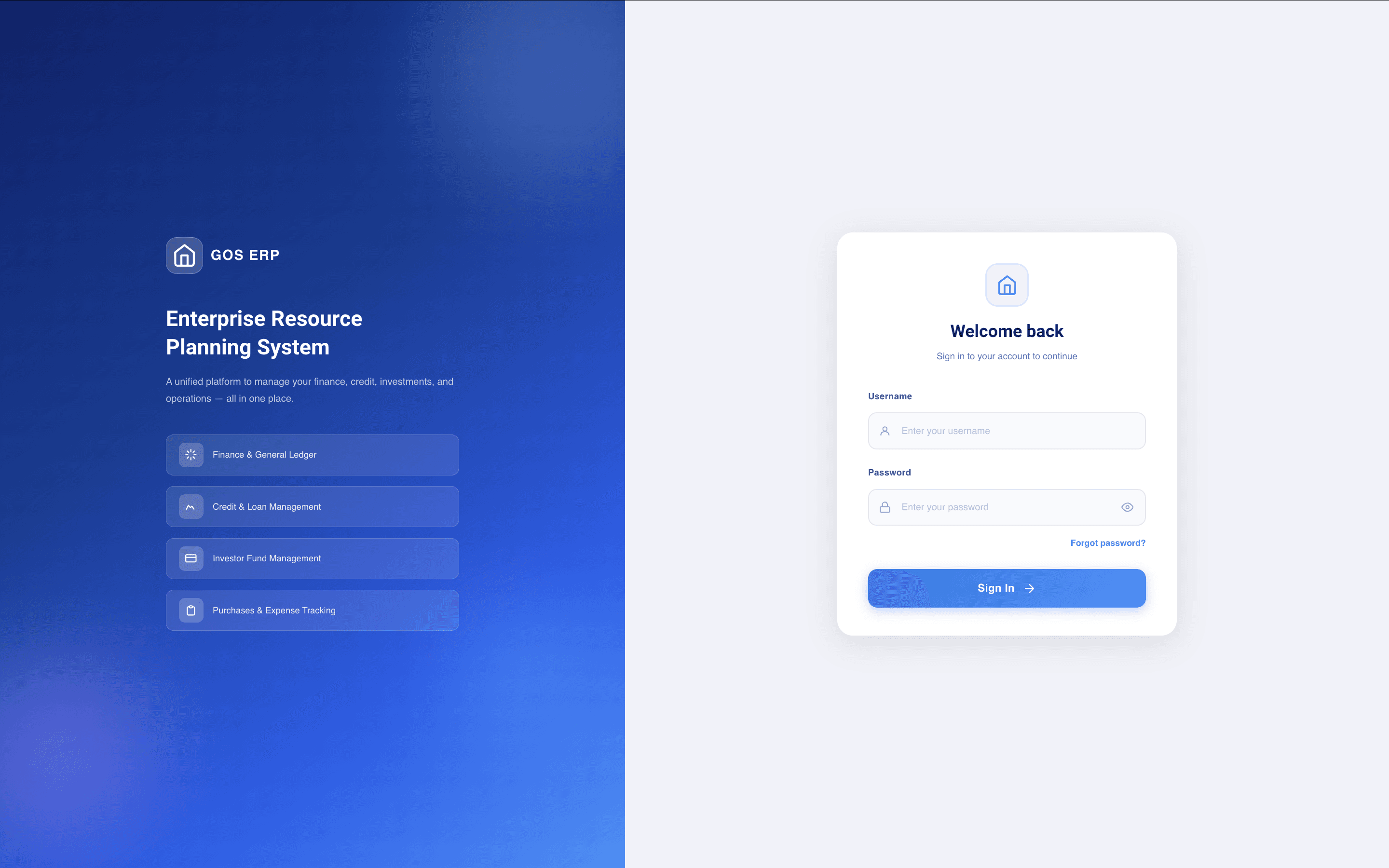
GOS Financial ERP dashboard screenshot

500+

Angular Components

70+

Domain Services

60+

Application Modules

Multi-tenant

Platform Model

Overview

A role-based Angular ERP that transforms complex financial operations into structured, auditable workflows for enterprise teams and individual users.

The Problem

  • Disconnected tools and spreadsheets created repeated data entry and inconsistent financial records
  • Manual handoffs slowed approval, reconciliation, and transaction-status visibility
  • Different organizations needed distinct workflows without fragmenting the shared product
  • Complex financial activity required reliable permissions and auditable process histories

The Solution

  • Built a unified Angular workspace spanning lending, treasury, accounting, procurement, inventory, assets, and expenses
  • Created reusable approval infrastructure with configurable workflow groups and authorization levels
  • Centralized authentication, loading, caching, and authorization behavior with guards and HTTP interceptors
  • Supported client-specific deployments through environment configuration while preserving shared business logic

Architecture Overview

High-level architecture of the application.

Key Highlights

Configurable multi-level approval workflows
End-to-end lending and credit-risk operations
Integrated treasury and general-ledger workflows
Role, company, and module-based access controls
Multi-client environment configurations
Dashboards, reports, and Excel import/export

Challenges

  • Balancing reusable UI patterns with the distinct validation and lifecycle rules of each financial domain
  • Coordinating token expiry, authorization failures, loading state, return URLs, and session data consistently
  • Keeping customer-specific deployment decisions out of shared business components
  • Maintaining clear feature boundaries as the application grew beyond 500 components

Results

  • Delivered one interface covering lending, treasury, accounting, procurement, inventory, assets, and expenses
  • Established reusable approval infrastructure across financial and operational workflows
  • Supported multiple client-specific production configurations from a shared application foundation
  • Integrated real-time notifications with operational dashboards and report generation

What I Learned

  • The strongest architectural boundaries followed business capabilities rather than individual screens
  • Loading, error, permission, and approval states are core product behavior in financial software
  • Products at this scale require continuous investment in lazy loading, typing, testing, and feature boundaries